Archetypes · Transformation · Inner Forms
est. 2026
Totem
STORYA totem is not something you find.
It is something that was always there.
Not outside.
Not above.
But around.
A presence that holds.
Protects.
It is not a symbol.
It is recognition.
Totem is the form that stays.
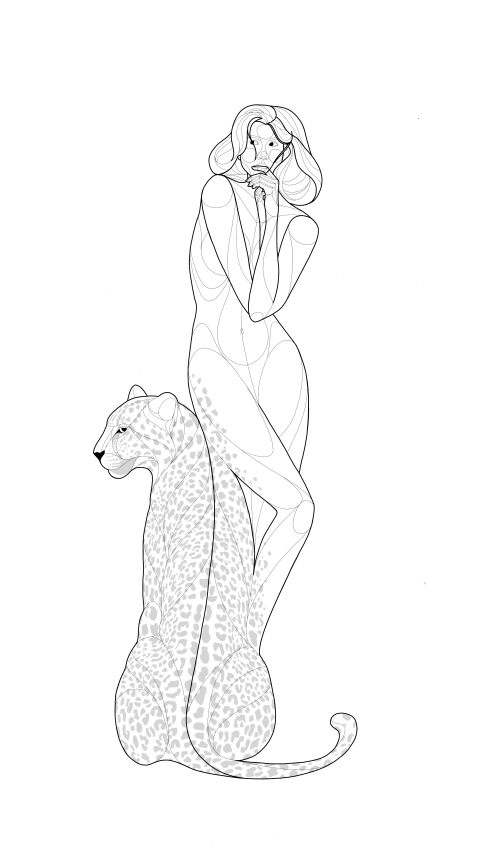
The Totem series explores the relationship between identity and archetypal animal forms.
Each work emerges through a process of observation, dialogue, symbolic interpretation and intuitive reading.
The resulting image is not intended as a portrait of appearance but as a portrait of presence.
Human and animal exist simultaneously.
Neither dominates the other.
Together they create a symbolic structure through which identity can be encountered and understood.

Totem
PROCESS
- 01
CONVERSATION
Stories, memories and recurring themes become the starting point.
- 02
MEDITATION
A guided meditation creates space for symbolic recognition.
Not to discover an animal through force or imagination.
Begin the meditation → - 03
INTERPRETATION
Visual patterns begin to connect.
An animal presence gradually becomes visible.
- 04
DRAWING
The composition develops through sketches before being translated onto paper.
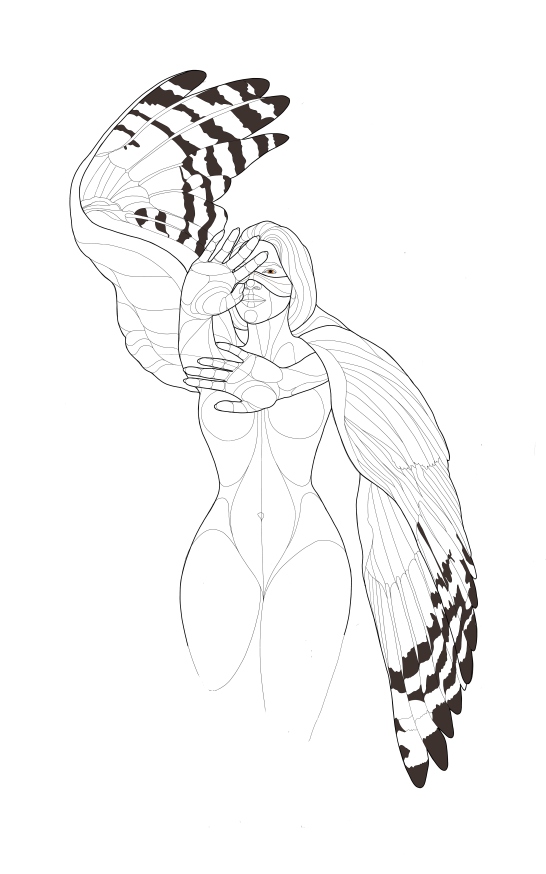
TOTEM II
in process
digital sketch
SOLD
- 05
ARTWORK
The final work is created by hand using pastel, graphite and ink on grey paper.
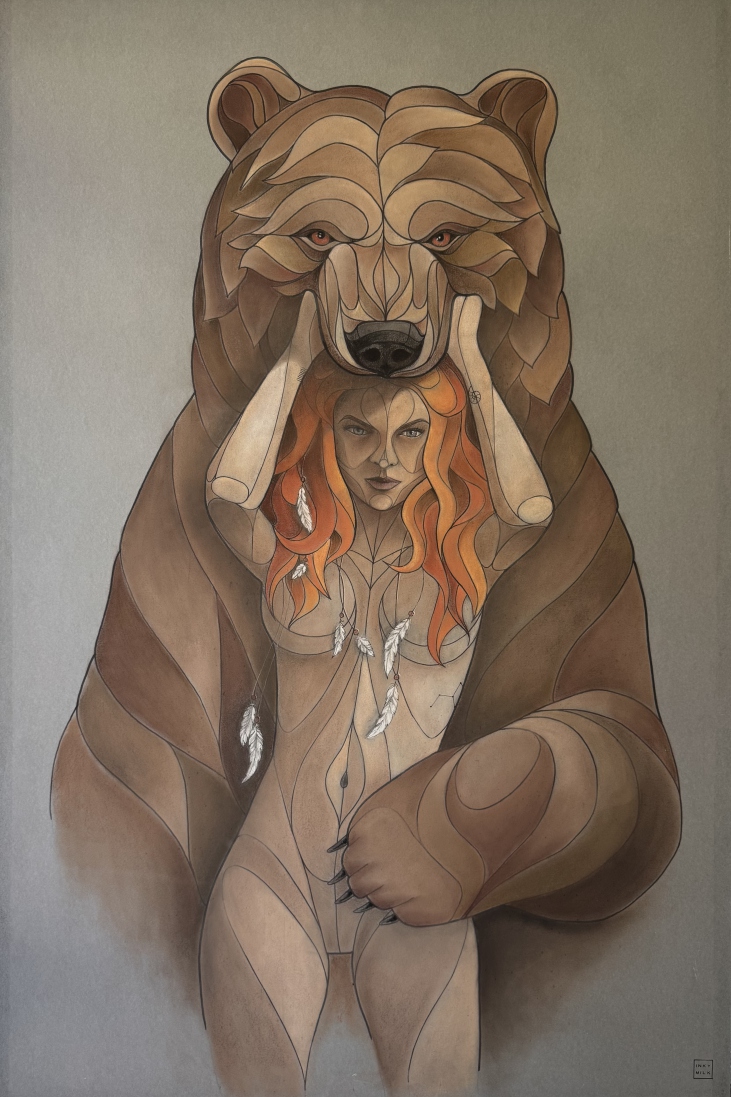
TOTEM I
He was always here
(Self-portrait)
Mixed media on grey paper
soft pastels, charcoal, pencils, and markers
120cm x 80cm
2026
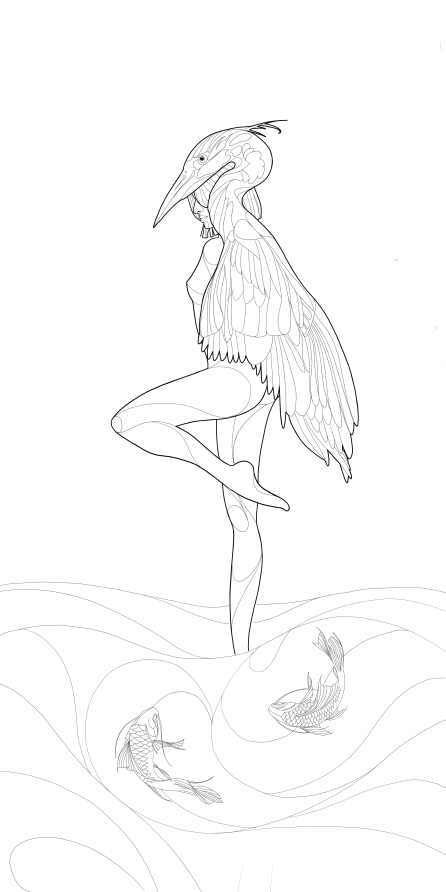

The work explores recognition through symbolic relationships between human, flora, and fauna.
Working with pastel, graphite, ink, and acrylic on grey paper, I create symbolic figures that exist between human and non-human forms. Bodies inhabit fruits, insects become thresholds, and animals emerge as presences.
Rather than illustrating stories, I explore the ways symbolic forms shape our understanding of protection, transformation, and identity.
Each work is created slowly, layer by layer, allowing the image to emerge rather than be imposed. I approach drawing as a process of discovery, where symbolic forms reveal inner structures that are often difficult to name, yet deeply familiar.